


When does allergen cross-contact become a consumer risk?
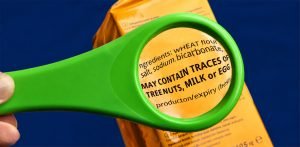
The possibility of allergen cross-contact – or even the presence of low levels of cross-contact – does not automatically mean a ‘may contain’ statement is needed. Before making this decision, food businesses must understand the likely consumer exposure and assess whether it could pose a health risk.
Why does this matter now?
In July 2026, Codex adopted international guidance on precautionary allergen labelling (PAL). The guidance supports a science- and risk-based approach: allergen controls should be applied first, and PAL should only be used where a residual risk remains. This is particularly relevant to South African food businesses, which are already required to use documented risk assessment to support PAL decisions.
 What does QRA do?
 What does QRA do?
Allergen quantitative risk assessment, or QRA, is one approach to assessing residual risk. In simple terms, it estimates how much of a cross-contact allergen a consumer will be exposed to, and whether the exposure could pose a health risk. The assessment considers factors such as the amount and form of the cross-contact allergen, the relevant allergen reference dose, and the amount of food likely to be consumed.
It is important to note that QRA is not a substitute for robust allergen management. It should not be used to justify PAL where best-practice allergen controls have not been implemented.
Using QRA to set specifications
QRA can support decisions beyond PAL. It can help food businesses establish scientifically justified cross-contact specifications for ingredients and finished products.
For example, a supplier’s declaration that an ingredient ‘may contain peanut’ provides important information; but on its own, it does not indicate the level of risk posed by the ingredient in the finished product. The assessment should consider how much peanut cross-contact may be present in the ingredient, how much of that ingredient is used in the product, how processing may affect the concentration, how much of the finished product a consumer is likely to eat, and whether any additional cross-contact could occur.
The resulting specification can then be used to establish acceptance criteria for ingredients or finished products, and to guide supplier requirements and risk management decisions. Where available information or test results indicate that a specification may be exceeded, the business should investigate and assess the potential consumer risk before deciding on the appropriate action.
Interpreting test results in context
Analytical results can provide valuable inputs for allergen risk assessment. However, a laboratory result is not automatically the final answer. A ‘not detected’ result applies to the sample tested, the analytical method used, and its reporting limit. It does not prove that an entire batch is free from cross-contact, especially where allergen residues may be present as particulates or may be unevenly distributed.
The sampling plan, the suitability of the analytical method, and the units in which results are reported all affect how the findings should be interpreted and applied in risk assessment.
Using QRA during an incident
QRA can also support recall and withdrawal decisions. When an allergen cross-contact incident occurs, the key question is not simply whether an allergen may be present, but whether the likely consumer exposure could pose a health risk. A structured assessment can help businesses identify the information needed, evaluate the potential exposure, and determine an appropriate course of action. This helps ensure that decisions are proportionate to the potential risk, rather than based solely on the detection or possible presence of an allergen.
A robust QRA documents the source of cross-contact, existing controls, available data, assumptions, uncertainty and conclusion. This provides a clear, evidence-based rationale for decisions that can be explained internally, to customers, and where necessary to regulators.
Want to know more about applying QRA in practice?
Our team offers training and consulting services focused on Quantitative Risk Assessment and Risk-Based PAL. Contact us to learn more.
Other articles and resources you may be interested in:
Food product development
Meaningful allergen quantitative risk assessment
Allergen test results: What the numbers mean for food safety
PAL: Empowering consumers OR Encouraging risk-taking behaviour?